Repeated memory lapses
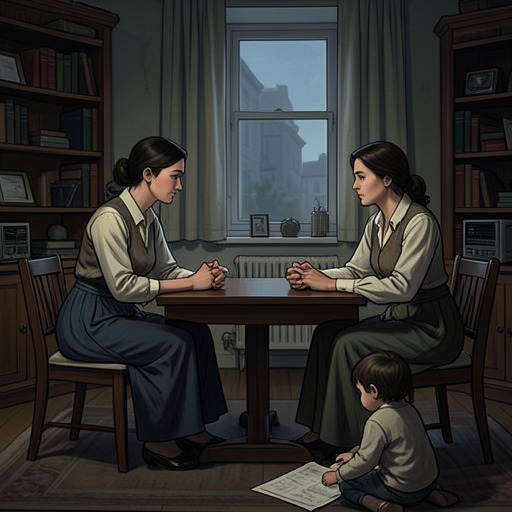
Crow GirlRepeated memory lapses are a persistent condition in Sofia Zetterlund’s life, separating what she experiences from what she can later recall. They unsettle ordinary time, interrupt her professional record-keeping, and make her own past return in fragments rather than as a continuous account. Their significance lies not only in what Sofia forgets, but in the uncertain intervals when a memory appears and she cannot know whether it will still be accessible tomorrow.
Pattern and Experience
Sofia has lived with gaps in her memory since she was a small child. She compares one lost experience to a glade beside a lake in Dala-Floda, where time seemed to stand still: she found it once, then spent weeks trying to find it again. The image makes forgetting more than a failure to retrieve information. A place and its unusual stillness remain important to her, yet the route back to them is unavailable. The past can feel present and vivid, then become as inaccessible as that glade.
The lapses also reach into the immediate present. After writing for a long time about a conversation with Linnea Lundström, Sofia turns from the seventh sheet of A4 to begin an eighth and is suddenly overcome by a paralysing weariness, with the sensation that she has been asleep. When she looks back through her notes, the interruption is not simply an empty stretch: what she finds on the pages troubles the distinction between the account she is recording and the memories emerging through it.
Notes, Memory, and Uncertainty
Sofia has developed a practical system for keeping different kinds of writing apart. She uses a red ballpoint pen for her own thoughts and a blue one for what a client says. After Linnea leaves, Sofia spends a long time writing up their conversation. But the written record does not remain a reliable boundary between therapist and client. Sofia rereads a page marked with a 5 and initially encounters Linnea’s story in blue; later she recognizes that the last three pages are written in Victoria Bergman’s voice, recounting the story of Viggo Dürer and Linnea Lundström.
The distinction between voices has become especially unstable because some of Linnea’s account is familiar to Sofia, while its words are mixed with Victoria’s memories. The recollection does not produce a new memory for Sofia, and the page is covered with incoherent writing. The effort to document what happened has therefore yielded neither a clean record nor a clear recovery of the past. After seeing what the notes contain, Sofia dials the prosecutor. The scene links her private difficulty separating memories to a consequential act outside the therapy room, without making the act itself proof that the gaps have been resolved.
An earlier therapy encounter shows how professional language can enter the same uncertain territory. When the psychologist leaves the room, Victoria looks at the notes and finds references to an African fetish mask associated with Solace Manuti, a cloth dog named Tramp associated with security in childhood, possible relatives, and memory lapses described as reminiscent of dissociative identity or multiple personality disorder. Victoria does not understand the notes and feels let down because the therapist has written about matters they had not discussed. The scene presents a record of possible explanations, not a settled diagnosis; it also shows that the act of writing about memory can itself become a source of mistrust.
Recollections That Return
The gaps do not mean that the past stays wholly absent. Sofia turns inward while trying to think about Gröna Lund and the night Johan went missing. Images begin to take hold, and she remembers seeing herself pull a pink mask over Johan’s face. The recollection is a sharp, disturbing fragment rather than a full account of the night. Its suddenness contrasts with the difficulty of summoning other memories, and the scene leaves the fragment present without supplying a complete sequence around it.
Sofia is aware that this moment of access may not last. Lying on the kitchen floor in Borgmästargatan, she knows she will have no recollection of being there and thinking that in twelve hours she must get up and go to work. At the same time, she remembers that she has a daughter in Denmark named Madeleine, and that she once went to find her. Even this recollection carries its own anticipated disappearance: Sofia does not know whether she will remember it the next day. The contrast between knowing and foreseeing the loss of knowledge makes the lapse an active uncertainty in the scene, not merely a blank discovered afterward.
Narrative Significance
Sofia’s memory is presented through breaks, returns, and records that cannot fully stabilize what they contain. The ice-cube image used for fading memories gives this process a physical measure: the harder she tries to hold on, the faster the recollections seem to melt. Her notes offer a second, external memory, but the Linnea and Victoria material shows that writing cannot reliably keep the voices or experiences separate. The result is a tension between documentation and disappearance: pages preserve words, yet the person reading them may not know whose memory they preserve or whether those words will restore anything.
These lapses also shape how information reaches the reader. The recollection of the pink mask and the knowledge of Madeleine’s existence emerge in the same inward sequence, while Sofia’s certainty about her future forgetting is already part of the present moment. Memory is therefore neither a dependable archive nor simply an empty space. It is intermittent access to consequential knowledge, accompanied by the prospect of its loss. The narrative’s fragments make that instability part of the form: what returns matters, but its appearance does not guarantee continuity, explanation, or recall on the following day.